A good yoga mat stays in place, feels comfortable under your hands, feet, and knees, gives you enough room, and fits the way you practice. There is no single best thickness or material: your choice depends on where you practice, how much you sweat, whether you carry the mat, and how much cushioning you prefer.
Use those needs as a checklist, then compare the specific mat’s surface, materials, weight, care instructions, and warranty. If you can try one, test a few familiar positions on a clean, level floor. “Thicker,” “eco-friendly,” or “non-slip” alone does not guarantee a better fit.
Key Takeaways
- Choose for your usual practice, not a universal “best” label.
- Balance grip, cushioning, stability, size, weight, and care; each mat involves trade-offs.
- Check the exact model’s material details, cleaning instructions, return terms, and warranty.
What makes a yoga mat good?
A good mat gives you reliable footing on the floor and a surface that feels secure under your hands and feet. It should offer enough cushioning for the poses you do, fit your body and practice space, and be manageable to clean, store, or carry. How well those qualities balance is personal: someone commuting to class may value low weight, while someone practicing at home may prefer more padding.
A useful starting point is to list your yoga style, practice location, sweat level, grip and cushioning preferences, portability needs, and any material sensitivities. Those are among the questions in Manduka’s Yoga Mat Finder, a manufacturer’s selection quiz—not an independent product test. Use the questions to identify priorities, then check specifications for the exact mat you are considering.
How thick should a yoga mat be?
Choose thickness by balancing cushioning, stability, and portability, but compare the exact mat rather than using thickness as a shortcut. Check listed thickness, firmness (if provided), weight, and rolled or folded size: construction affects how a mat feels, while its weight and packed size affect how manageable it is to carry.
| Your priority | What to compare | Possible trade-off |
|---|---|---|
| Travel or commuting | Listed weight, packed size, and whether it folds or rolls easily | Cushioning and carry comfort depend on the specific construction |
| Everyday practice | Padding and firmness together | A middle thickness can feel different across materials |
| More cushioning at home | Thickness, firmness, and how much the surface compresses | Added weight or bulk may matter for storage or moving it |
For one model-specific example, Manduka describes its PRO as a 6 mm, high-density mat with firm support and floor-like stability. That is the maker’s description of that mat, not a guarantee about all mats at 6 mm (Manduka PRO Yoga Mat 6mm). If possible, try a kneeling position and a familiar standing pose before deciding. See our guide to thick yoga mats for more on the cushioning trade-off.
Does grip matter more than cushioning?
Neither matters more for everyone. Check both the mat’s grip on the floor and how secure your hands and feet feel on its surface. An underside that stays put does not necessarily mean the top will feel secure when damp.
For heated practice or sweaty hands, look for the manufacturer’s specific guidance about wet grip and towels. Manduka says moisture stays on the surface of its closed-cell PRO mat rather than absorbing into it, and notes that the mat may feel slick for people who sweat. The company recommends a towel for those sessions. That example shows why “easy to clean” and “grippy when wet” are different questions; other mats may behave differently (Manduka PRO Yoga Mat 6mm).
If your hands slip, check whether sweat, residue, or a surface’s break-in guidance could explain the feel. Clean the mat only as directed, and consider a compatible towel if moisture is the issue. Manduka says no special preparation is needed for its PRO and advises against salt treatments; don’t apply that instruction—or a treatment intended for another mat—to a different model without checking its maker’s directions.
How do you choose a mat material?
Read the material description for the exact model, including its top surface and backing. A mat can have more than one material, and a broad label does not tell you how its particular surface will feel or what care it needs. Check the maker’s cleaning directions before buying if you want to avoid special maintenance.
If you have a latex allergy or sensitivity, look for an explicit statement about the exact mat and ask the manufacturer if the listing is unclear. Manduka lists its PRO as PVC and latex-free; those details apply to that product and should not be generalized to other mats (Manduka PRO Yoga Mat 6mm). If you’re considering cork, our cork yoga mat guide covers that option. Treat terms such as “natural” or “eco” as prompts to check construction and supporting details, not as a full explanation by themselves.
What size and weight should you look for?
Choose dimensions that let you move without repeatedly reaching the edge, then decide how much weight you are willing to carry. Check both length and width against the positions you use. At home, storage space may matter more than carry weight; for a studio commute, a mat that is awkward to transport can be a poor fit even if it feels comfortable on the floor.
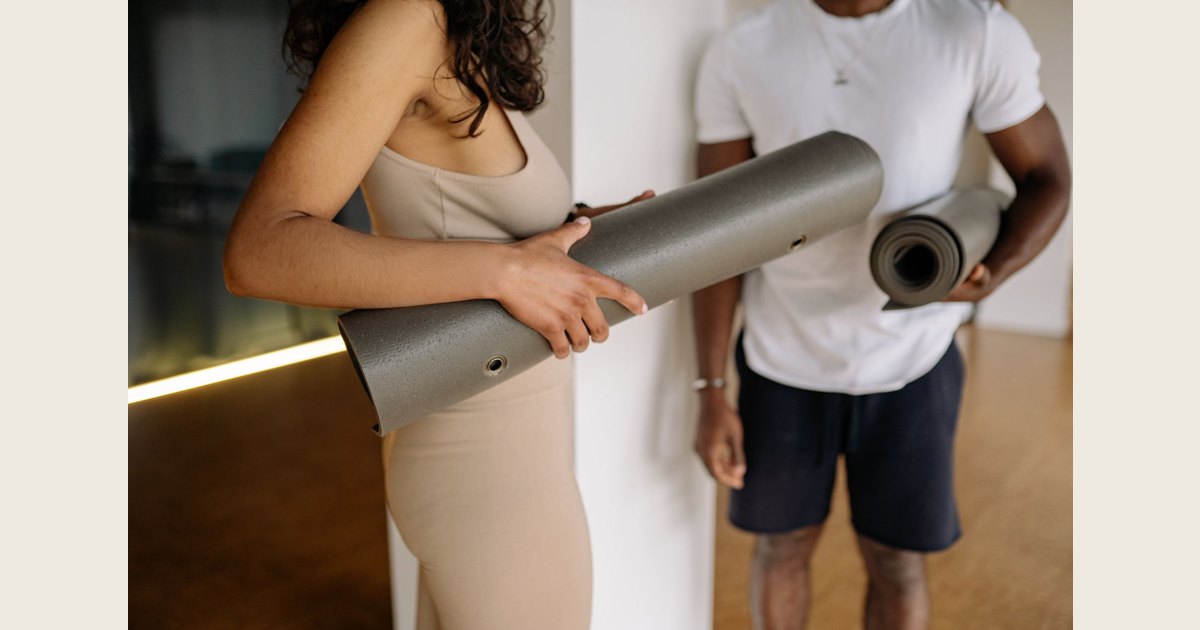
Illustrative stock photo by Yan Krukau on Pexels, used under the Pexels license. It shows people carrying mats, not comparing products.

For a fit check, lie down with your arms extended as you usually would, then try a familiar lunge or wide-legged position. Notice whether you stay on the mat without adjusting. Compare your options’ listed dimensions and rolled weight. Our guides to yoga mat length and sizing and travel yoga mats cover those choices in more detail.
How can you test a yoga mat before buying?
If you can handle it in person, unroll the mat on a clean, level floor and check the features that matter in your routine:
- Base: Shift your weight gently. Does the mat stay put without sliding, bunching, or curling?
- Surface: Press your hands and feet onto it. Does it feel secure for movements you know?
- Cushion and stability: Kneel, then try a familiar standing pose. Is there enough padding without an unsteady feel?
- Fit: Move through a few comfortable poses. Do you have enough room?
- Carry: Roll it up. Is its weight and size manageable for your routine?
- Details: Confirm material, allergy information if relevant, care directions, return terms, and warranty.
Stop if the mat slides or a position feels unsafe. If shopping online, compare dimensions and weight and follow the seller’s rules for any tryout or return. A safe, brief check can reveal an obvious mismatch, but it can’t predict whether every surface will suit every person or setting.
What should you check about care and warranties?
Follow the instructions for the exact mat rather than using a generic cleaning recipe. For its PRO, Manduka recommends warm water or its own mat wash, says other cleaning solutions are not tested or recommended, and advises wiping the surface dry before rolling it. It also recommends cool, dry storage. These directions are model-specific; check the product page or label for the mat you choose (Manduka PRO Yoga Mat 6mm).
A warranty is not a promise against normal wear. Check its term, covered defects, exclusions, proof-of-purchase requirements, purchase-channel rules, and claim process. Manduka says the PRO’s lifetime guarantee covers manufacturing and workmanship defects under normal use, but excludes misuse, improper care, modifications, and normal cosmetic wear. Other products may have different terms, so read the applicable warranty before relying on it (Manduka PRO Yoga Mat 6mm).
Price should reflect features you will use, not just a premium label. Compare the total cost if your practice requires a separate towel or other accessory. Our guide to yoga mat prices and what you get offers more context.
What if your mat slips or feels uncomfortable?
If the mat slides across the floor, stop and check that the floor is level and the mat is set up as directed. If the top feels slippery, consider whether moisture or residue is involved; follow the mat’s care instructions, and use a towel only if it is compatible and feels secure. Don’t assume that a product advertised as “non-slip” will work the same on every floor or when wet.
If a new surface feels different, check the maker’s break-in guidance instead of trying an unapproved treatment. If the mat curls, shifts, or feels unstable enough to make a pose unsafe, stop using it for that movement and check the return or support options. A mat can change how the floor feels, but it is not a medical fix; stop movements that cause pain and seek appropriate guidance when needed.
Quick answers before you choose
Is a thicker yoga mat always better?
No. More thickness may add cushioning, but firmness and construction affect the feel, and a thicker mat can be bulkier or less steady for some movements. Compare cushioning and stability together.
What is a good yoga mat for hot yoga?
Choose based on the maker’s guidance for sweaty practice. If the surface may feel slick as moisture builds, check whether a compatible towel is recommended. Don’t assume that every mat provides the same wet grip.
Do beginners need an expensive yoga mat?
Not necessarily. Start with a mat that stays put, feels comfortable, fits your body and space, and is manageable to carry and clean. Pay more only for a feature you value, and check the return and warranty terms before buying.
The bottom line
A good yoga mat is the one that suits your body, practice, and setting: enough cushioning without unwanted instability, grip that fits your sweat level, usable dimensions, and care requirements you can follow. Compare the exact model’s details, and try it safely if you can. No single thickness, material, or price makes a mat right for everyone.
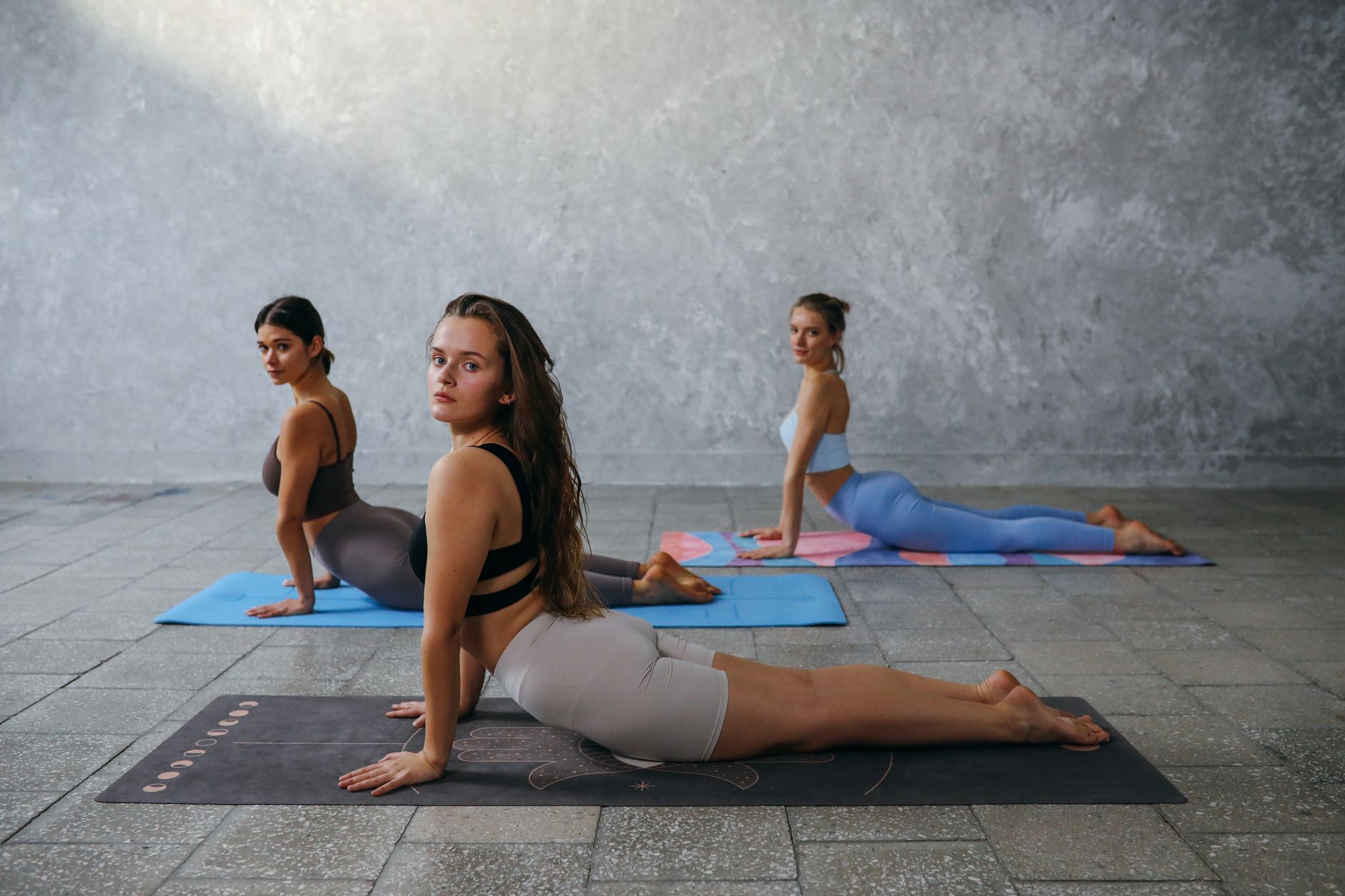
Cover photo credit: KoolShooters on Pexels, used under the Pexels license. Illustrative stock photography; no product testing is implied.