A yoga mat can cost about $20 for a simple model, while a branded mat with different materials or construction can cost several times more. For example, the official listings checked for this guide showed a Gaiam PVC mat at $19.98, Manduka’s TPE Begin mat at $62, and its high-density PVC PRO mat at $144. Those are examples—not an industry average or a survey of every retailer—and prices and promotions can change.
Choose based on the features you will use, then compare the delivered price and terms.
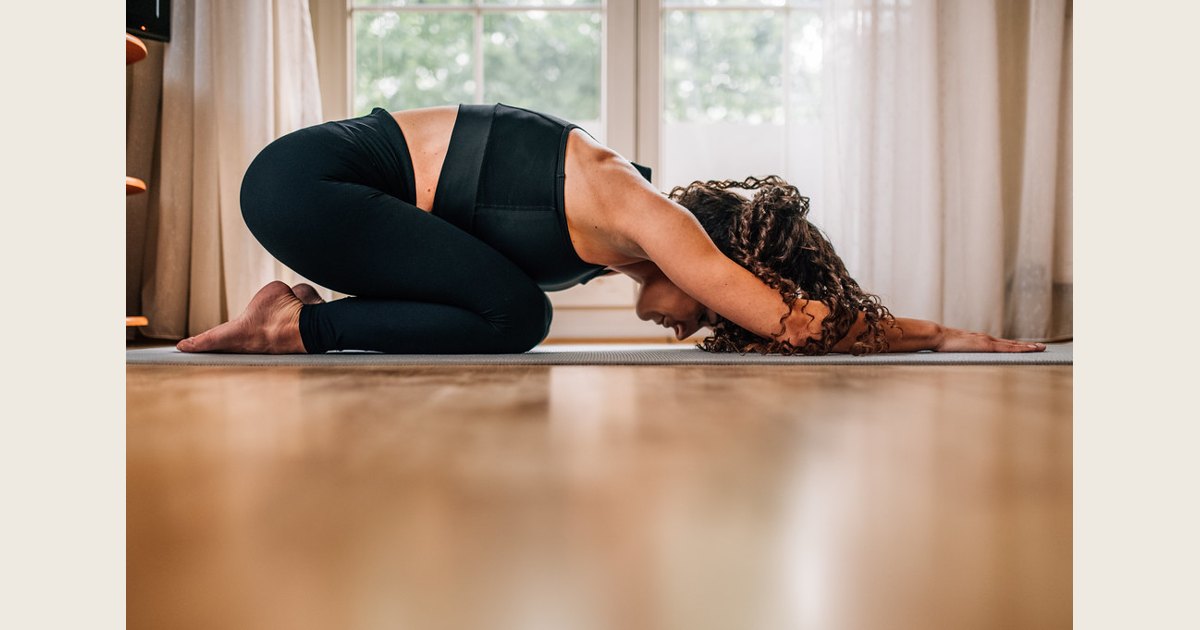
Featured image: “Extended puppy pose on yoga mat. A young woman stretching” by Ivan Radic, licensed under CC BY 2.0. Resized and padded. Illustrative stock photography; no product testing is implied.
Key Takeaways
- The three manufacturer listings checked here ranged from $19.98 to $144; this is a small product sample, not a market average.
- Compare material, thickness, dimensions, and stated weight; one listing may omit a detail another provides.
- Include shipping, tax, and any separately purchased towel or carrying accessory in your budget.
- Treat guarantees and performance language as product-specific manufacturer claims, and check the exact terms.
How much does a yoga mat cost?
These prices and specifications were listed on official US product pages checked October 25, 2026. The examples are illustrative, not a market average; the products differ in design and advertised features.
| Product example | Listed price | Published specifications and terms |
|---|---|---|
| Gaiam Essentials Yoga Mat (6mm) | $19.98 sale price | PVC; 6 mm; 68 × 24 in; textured surface; Gaiam states it is covered by its lifetime mat guarantee |
| Manduka Begin Yoga Mat (5mm) | $62 | TPE; 5 mm; 68 × 24 in; 2.5 lb; reversible design and center stripe; used items are not eligible for return |
| Manduka PRO Yoga Mat (6mm) | $144 | PVC; 6 mm; standard size 71 × 26 in; 7.5 lb; high-density, closed-cell construction; lifetime guarantee; used items are not eligible for return |
The checkout total can differ from the sticker price. Add applicable tax and shipping; check whether a sale, bundle, or minimum-order shipping offer applies. Manduka’s product page advertises free economy shipping on orders over $140, but the cart is the final check for delivery charges and terms. Count an accessory only if the listing says it is included.
Contents
What makes one yoga mat cost more than another?
A higher price may reflect a feature or brand positioning, but it is not a stand-alone measure of comfort, grip, or durability. Compare the actual specifications and consider how you practice.
Material and construction
Material can explain part of the difference between two listings. The examples above include PVC and TPE mats. Gaiam describes its Essentials mat as PVC with a textured surface; Manduka lists the Begin as TPE and the PRO as PVC, with the PRO described as a high-density mat with a closed-cell surface. These are manufacturer descriptions. They are useful for comparing stated construction, but they are not independent tests of grip or lifespan.
If material matters to you—for example, because of a sensitivity, cleaning preference, or environmental concern—read the exact product specifications rather than assuming all mats in a price tier use the same materials. The Gaiam page identifies its example as latex-free; do not extend that statement to other mats without checking their labels.
Cushioning, dimensions, and weight
Thickness is one specification, not a complete comfort rating. The Gaiam Essentials and Manduka PRO examples are both listed at 6 mm, while the Manduka Begin is listed at 5 mm and 2.5 pounds. The PRO is listed at 7.5 pounds, but Gaiam does not provide a weight for the Essentials, so these sources do not establish how much heavier one is than the other. A difference in thickness alone does not describe the entire feel or portability of a mat.
Look at the listed length and width against the space you have and how you use the mat. A larger mat can be helpful if you regularly move beyond a standard footprint, but it can take up more room and be heavier to carry.
For more on sizing, see how long a yoga mat should be. If portability is your priority, compare the options in our travel yoga mat guide.
Brand features, guarantees, and extras
Design details and support policies may affect price. The Begin listing highlights a reversible surface and center alignment stripe. Both Gaiam and Manduka list a lifetime mat guarantee for these specific products. Read the Manduka PRO guarantee terms: its coverage is for manufacturing and workmanship defects under normal use, with exclusions for misuse, improper care, modifications, and normal cosmetic wear. Do not assume the two manufacturers’ guarantees have identical terms; review the policy for the exact mat. A guarantee is not a promise that a mat will remain like new under every condition.
Check whether any mat bag, strap, towel, or cleaning product is actually included. A photo showing an accessory does not establish that it comes with the mat. If you expect to buy extras, add those costs separately rather than comparing only mat prices.
What should you pay for your kind of practice?
Start with the feature you need, then look for the least expensive listing that meets it. These examples offer practical reference points, not universal budget bands:
- You want a simple mat for occasional home practice: A listed $19.98 option shows that a basic 6 mm PVC mat can be available at a low upfront price. Confirm the dimensions, odor and care guidance, and return policy before ordering. Gaiam states that this mat is covered by its lifetime mat guarantee; check its full terms to understand the coverage.
- You want a different material or a particular design feature: The $62 Begin example lists TPE, a reversible design, and a center stripe. Decide whether those features are useful to you; their presence alone does not prove better grip or a better fit.
- You want a larger mat with a stated guarantee: The $144 PRO example is 71 × 26 inches and 7.5 pounds in standard size, and the manufacturer states a lifetime guarantee. Consider the price, weight, shipping terms, and guarantee exclusions together. Manduka says its closed-cell surface may feel slick for people prone to sweating and recommends pairing it with a hand or hot-yoga towel for grip; include that extra only if you decide you need it.
- You practice on the move: A full-size mat may not be the most convenient purchase. Compare folded size and carrying weight, and see our travel-mat guide before paying extra for features you will not use.
For a quick comparison, write down four things before checkout: your maximum budget, the size you need, how much cushioning you prefer, and whether you need to carry the mat. Then compare two or three products against the same list. This keeps a feature-rich product page from turning into a checklist of extras you never wanted.
How to compare the real cost before buying
Use the same simple calculation for every option:
Delivered cost = mat price + shipping + tax + separately purchased essentials − discounts.
The exact total depends on your location, retailer, current promotion, and order contents, so confirm it in the checkout cart. A listed free-shipping threshold may make sense if you already need another item, but buying unnecessary products just to reach a threshold can cost more overall.
Before you buy, check:
- Dimensions and thickness: Does the mat fit your body and practice space? If extra cushioning is important, compare the thickness options and tradeoffs in our thick yoga mat guide.
- Surface and sweat: Look for the maker’s description and care instructions. If you tend to sweat during practice, check whether the product page recommends a towel or gives a limitation; an added towel may change your total.
- Weight and storage: A heavy mat may be fine at home but inconvenient to carry. A thinner travel model can prioritize portability over cushioning, so compare intended use rather than price alone.
- Cleaning and care: Follow the instructions for the exact mat. Gaiam says to air out its new Essentials mat for two to three days, spot-clean it, dry it flat, and avoid extended sun exposure. Those directions are product-specific, not a rule for every mat. For more, see our yoga mat cleaning guide.
- Returns and guarantees: Check the return window, who pays return shipping, and what the guarantee excludes. A guarantee can reduce some repair or replacement uncertainty, but read the terms before treating it as added value.
- Material details: Verify the exact model’s material and any latex-free or other material statements, especially if those details matter to you. Do not assume a brand uses one material across its whole range.
Common questions about yoga mat prices
Is a $20 yoga mat good enough?
It can be, if its dimensions, surface, and thickness work for your practice and the seller’s terms suit you. The Gaiam Essentials listing checked for this guide was $19.98 on sale and specified a 6 mm PVC mat measuring 68 × 24 inches. That example is not a guarantee that every mat at that price has the same specifications or suits every user.
Is an expensive yoga mat worth it?
It depends on whether the specific features are worth the extra cost to you. Compare materials, dimensions, weight, care, and guarantee coverage instead of assuming a premium price proves better comfort or lifespan. The Manduka PRO listing, for example, describes a 6 mm, 7.5-pound standard mat and a lifetime guarantee with stated exclusions; whether that combination justifies $144 is a personal value decision, not something a listing can settle for everyone.
Does a thicker yoga mat cost more?
Not necessarily. In the examples here, both a $19.98 Gaiam mat and a $144 Manduka PRO mat are listed as 6 mm thick, while the $62 Manduka Begin is 5 mm. Thickness is only one part of the product, and these three listings do not show that thickness alone determines price.
Should you replace your yoga mat on a schedule?
There is no replacement interval established by the product examples cited here. Follow the care instructions for your model and inspect it for changes that affect your use, such as damage or a surface that no longer feels suitable. The available manufacturer pages describe product-specific care and guarantees; they do not support a universal replacement timetable.
Bottom line
For a straightforward mat, the current examples show that a listed price around $20 is possible; specific models with other materials or features can cost more, including the $62 and $144 examples above. These prices are snapshots of individual products, not averages, and can change with sales or availability.
Choose based on the specifications you will use, then compare the final delivered total and the terms that apply. A higher price may buy a design detail, different construction, larger dimensions, or a stated guarantee—but it does not automatically make that mat the right one for your budget or practice.